
OUR FIELD TRIPS ARE FREE!!!
AND YOU CAN EARN A BUS GRANT!!!!
HERE’S HOW!
WE HOST FIELD TRIPS ON TUESDAYS!
Click Here to Check Available Dates
- RECRUIT ENOUGH CLASSES TO PARTICIPATE TO FILL THE BUS (if an odd # of classes, please invite another class to fill the 2nd bus)
- COMPLETE THE FIELD TRIP TOUR REQUEST FORM & EMAIL TO SARAPB@SVSWA.ORG
- GET A BUS QUOTE FROM YOUR TRANSPORTATION DEPARTMENT AND SUBMIT IT TO US!
- PARTICIPATE IN PRE-FIELD TRIP LANDFILL PRESENTATION BY SALINAS VALLEY RECYCLES STAFF SCHOOL-WIDE SUSTAINABILITY ACTIVITIES
- HOST TWO (2) SUSTAINABLE ACTIVITIES AT YOUR SCHOOL (WITH THE HELP OF SVR STAFF OF COURSE)
- ATTEND YOUR FIELD TRIP! ( Plan on 4 hours on site) USUALLY 9:30AM – 1:30P
HERE IS A LIST TO CHOOSE FROM FOR THE SUSTAINABILITY ACTIVITIES:
(SALINAS VALLEY RECYCLES STAFF CAN HELP FACILITATE ALL OF THESE ACTIVITIES)
Recruit at least 50 students to participate in picking up micro-trash. Microtrash is all the tiny pieces of trash that get overlooked during litter cleanups but are easily picked up by wind and water and swept in the storm drains and waterways. Then with the help of SVR staff, you will weigh and analyze the waste you collect and discuss the effects of microplastic on the environment.
Don’t be a litterbug! School Recycling! 5 R’s! Food Scrap Recycling
Research and discover why people need to know about these topics. Then create fun posters educating other students and staff about how they can improve!
If you have multiple buses, multiple poster campaigns would be acceptable.
Plant a tree or two or five on your campus and take care of it all year. Planting a tree can help offset carbon emissions. Have a discussion about carbon footprints and carbon handprints. Carbon footprints are what we do that harm the earth and carbon handprints are what we do that help the earth!
Recruit at least 3 classes to help do a litter pick-up around your campus. Then SVR staff will help you do a waste audit to see what types of trash you picked up and where you picked it up from. From there we can help you build a plan to make sure we have the right kind of trash/recycling bins in the right places for people to do the right thing and throw things away properly.
Host a friendly protest for Mother Earth. Have kids make signs with the information that they have learned. They can march at lunch time and hand out flyers and talk to other students about what they have learned about taking care of our planet.
Collect your trash from your at-home lunches on regular days. At the end of lunch, we will weigh your waste. Then learn about ways you can pack your lunches to be “Zero Waste. At the end of the Zero Waste Days, we will weigh your waste again and measure the difference. Pick 3 specific days and advertise to your school that they will be Zero Waste Lunch Days. Educate your students and staff on how they can pack their lunch with Zero Waste. If you can get a table in the cafeteria specifically for your event, even better!
Help all of your classrooms create their food scrap bin for their classroom, collect food scraps from any food eaten in the classroom, and set up a program for each class to transport their food scraps to the cafeteria at lunchtime for proper disposal.
Show a movie like Wall-E or Fern Gully… or an Kid Friendly Eco Documentary to families at your school. Then have a brief discussion about the environment and how we take care of it.
Decide the size and design of your bottle cap mural. Start collecting plastic bottle caps of the right colors. When you have all of the caps you need the mural to be laid out and glued. You will need to get permission from the school to hang the mural.
Collect gently used age-appropriate books and host a BINGO for books event for your school. The event can be at lunchtime or after school.
For use in the classroom – Students all bring reusable water bottles. Students also each bring a reusable plate, bowl, cup, spoon & fork in a ziptop bag for parties and students wash and dry after each use. These products can be used anytime there is a class party or any other food eaten in the classroom.
We would love to hear about it.
The project must meet the following criteria:
- Involve at least 75 additional students
- Involve reduction, reuse or recycling of resources
- Educate students, staff and/or parents
- Lead to sustainable change on your campus
Guide students to write letters or emails to local representatives about environmental issues they’ve learned about, using classroom computers.
Click here for a Menu of
Field Trip Presentation Options
Landfill Tour (Included in every visit, not optional)
Everyone should know where their trash goes after they throw it away. It’s important to understand that trash doesn’t just disappear. It’s enlightening to see where ‘away’ actually is.The tour will take you to our Recycling Center, Landfill Gas (Waste-to-Energy) Power plant, the open face of the landfill, the composting center, and the organics de-packager. Throughout the tour, we will discuss important concepts and draw connections between the landfill, environmental concerns, and the changes we can make immediately and throughout our lives to reduce our impact on the environment.
Next Generation Science Standards: K-ESS3-3, 3-ETS1-1, 4-ESS3-1, 5-ESS3-1, MS-ESS3-3,
MS-ESS3-4, MS-ESS3-5, HS-LS2-7, HS-ESS3-3, HS-ESS3-4, HS-ESS3-5, HS-ESS3-6, HS-ETS1-3
The 5’R’s & Recycling Presentation
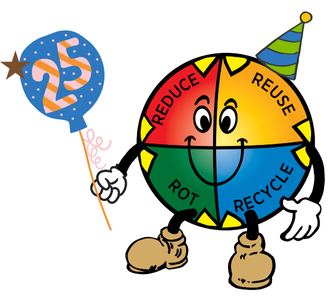
Discover the significance of the 5 R’s – Refuse, Reduce, Reuse, Recycle, and Rot, and explore why the order of the R’s is crucial in sustainable living. Additionally, gain insight into the specific items that can be appropriately recycled in the curb bins at your residence and those that require special recycling centers. Join in an interactive and engaging presentation that offers a hands-on approach to learning about recycling, complete with interactive activities and a captivating presentation designed to make the topic both enjoyable and educational.
Next Generation Science Standards: K-ESS3-3, 3-ETS1-1, 4-ESS3-1, MS-ESS3-1, MS-ESS3-3,
MS-ESS3-5, MS-ESS3-4, HS-LS2-7, HS-ESS3-3, HS-ESS3-4
Explore the fascinating world of food waste recycling and the various methods of composting. Delve into the intricate ecosystem of vermicomposting, where worms play a crucial role alongside other essential decomposers. Discover the complex network of organisms responsible for breaking down food scraps and witness their work firsthand. You can even use magnifying glasses to observe the smallest decomposers diligently at work in our demonstration composting beds. Participants are given the opportunity to get their hands dirty, touching and actively observing each decomposer in their natural environment.
Next Generation Science Standards: 5-LS2-1, 5-ESS3-1, HS-LS2-7, HS-ESS3-4, HS-ESS3-5, HS-ESS3-6
Embark on a fascinating tour of our thoughtfully designed Pollinator Garden, where you can observe a diverse array of plants and learn about their importance to our ecosystem. Following the tour, there will be an engaging presentation highlighting the wide variety of pollinators and the critical role they play in preserving our planet’s biodiversity. This will be a great chance to understand why it’s crucial to protect these essential creatures. After the presentation, get hands-on with activities tailored to different age groups. For younger students, the first activity will provide a captivating lesson on how pollinators transfer pollen from one plant to another. In the second activity, they will get to unleash their creativity by crafting their very own pollinator resting station to take home for their personal garden. Meanwhile, for the older students, they will put their knowledge to the test with an exciting round of Pollinator Jeopardy where they can win prizes. Following this, they will have the opportunity to get involved in conservation efforts by building a bee hotel, contributing to the protection of these essential pollinators.
· Not suggested if you have students who have Bee Allergies as we do have different types of bees in the garden.
Next Generation Science Standards: 2-LS2-2, 4-ESS3-1 5-LS2-1, HS-LS2-7
During the gardening workshop, you will have the opportunity to engage in a variety of hands-on activities such as planting, harvesting, watering, and weeding. You will gain practical experience by participating in the maintenance tasks required in the garden. Additionally, you will receive in-depth insights into our demonstration gardens, including how they were constructed, their ongoing maintenance, and the individuals responsible for their care. Furthermore, you will have the chance to explore diverse garden types, including vegetable gardens and flower gardens, and learn about the distinct characteristics of various plants, such as annuals, semi-annuals, and perennials. Moreover, you will acquire knowledge about establishing gardens in different environments, whether it be at your school or in limited spaces within your own home. As part of the experience, you will discover the significant impact of the on-site compost on our garden’s well-being. Lastly, you will have the opportunity to plant a seed during the workshop, which you can take home and attentively observe as it grows.
Next Generation Science Standards: 2-LS2-2, 5-LS2-1, 5-ESS3-1, MS-ESS3-4, HS-LS2-7, HS-ESS3-4
HS-ESS3-5
*This is geared for students in Middle School and Up
Get ready to delve into California’s SB 1383 Composting Law and uncover the ins and outs of recycling food waste at home and school. Immerse yourself in an array of composting techniques, including in-depth insights into Vermicomposting and Backyard Composting as shared by our skilled Master Composters. Cap off the experience by joining our Backyard Composting Scavenger Hunt, where you’ll track down all the essential materials to kickstart your own backyard composting venture.
Next Generation Science Standards: MS-ESS3-4, MS-ESS3-4, MS-ESS3-5, HS-LS2-7, HS-ESS3-4, HS-ESS3-5, HS-ESS3-6
Contact Information
Sara Papineau-Brandt
Resource Recovery Technician – Schools Lead
sarapb@svswa.org
831-775-3006
Looking for a classroom presentation?
Here is the request form for us to come to you!